
Q&A
Introduction
The quality and reliability of the Powering Interlock Controller (PIC) are essential, as the system plays a key role in protecting the LHC powering infrastructure and contributes to machine protection. To ensure that every hardware and software component complies with the project requirements before installation, a comprehensive validation strategy has been developed around a set of dedicated test benches.
Rather than relying solely on system-level commissioning, the PICv2 project verifies each stage of the production process independently. Dedicated test benches have therefore been developed to validate interface electronics, assembled hardware and application software under controlled laboratory conditions. This approach allows defects to be detected as early as possible, improves production quality, and significantly reduces commissioning effort.
The validation infrastructure is organised into three complementary test benches:
- Interface Card Electrical Test Bench
An automated electrical test bench dedicated to the qualification of all PICv2 interface cards. It verifies the complete electrical functionality of every production board before integration into a crate.
- Crate Assembly Test Bench
A production test bench used after crate assembly to verify the electrical continuity, wiring integrity and correct installation of all modules before the crate enters functional testing.
- Functional Test Bench
A complete hardware simulator reproducing the behaviour of the external systems connected to the PIC (QPS, Power Converters, AUG, UPS, etc.). It allows the complete PIC application—hardware and software—to be validated under realistic operating conditions before deployment.
Together, these three test benches provide a complete validation chain, from individual electronic boards to the fully integrated PIC system, ensuring a high level of confidence in every PICv2 deliverable.
Automated Test Bench for PIC Interface Cards
The Powering Interlock Controller (PIC) relies on special electronic cards to safely connect with other systems. To ensure these cards (EXT, A, B and C) are built correctly, we are developing a fully automated test bench that checks every component and connection. Using advanced measurement equipment and a custom controller, the system makes testing fast, reliable, and consistent.
To guarantee reliability, every component on these interface cards must be correctly mounted and of the right type and value. The new automated test bench has been designed to ensure this quality systematically.
Built on a PXI system from National Instruments and programmed in Python, the test bench provides a fully automated validation of each card.
The setup consists of a PXI crate connected to a dedicated PIC slave crate, which is fitted with a Test Controller Card (TCC) in place of the usual backplane. The TCC integrates all the necessary electronics—relays, protection resistors, and connections to the PXI measurement and power modules—while preserving the sliding mechanism for easy insertion and testing of each card.
This approach ensures that every PIC interface card is thoroughly and consistently verified before being deployed.
| Card | Component | Description | EDMS File |
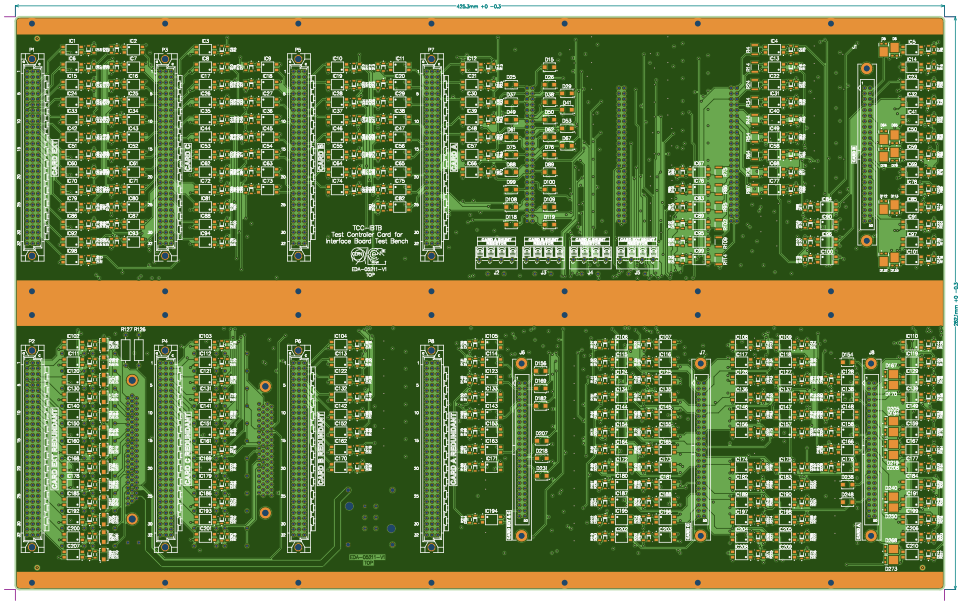 | TCC | Test Controller Card: To interface cards EXT, A, B, C with the PXI crate |
Crate Assembly Test Bench
Functional Test Bench
| Card | Component | Description | EDMS file |
|---|---|---|---|
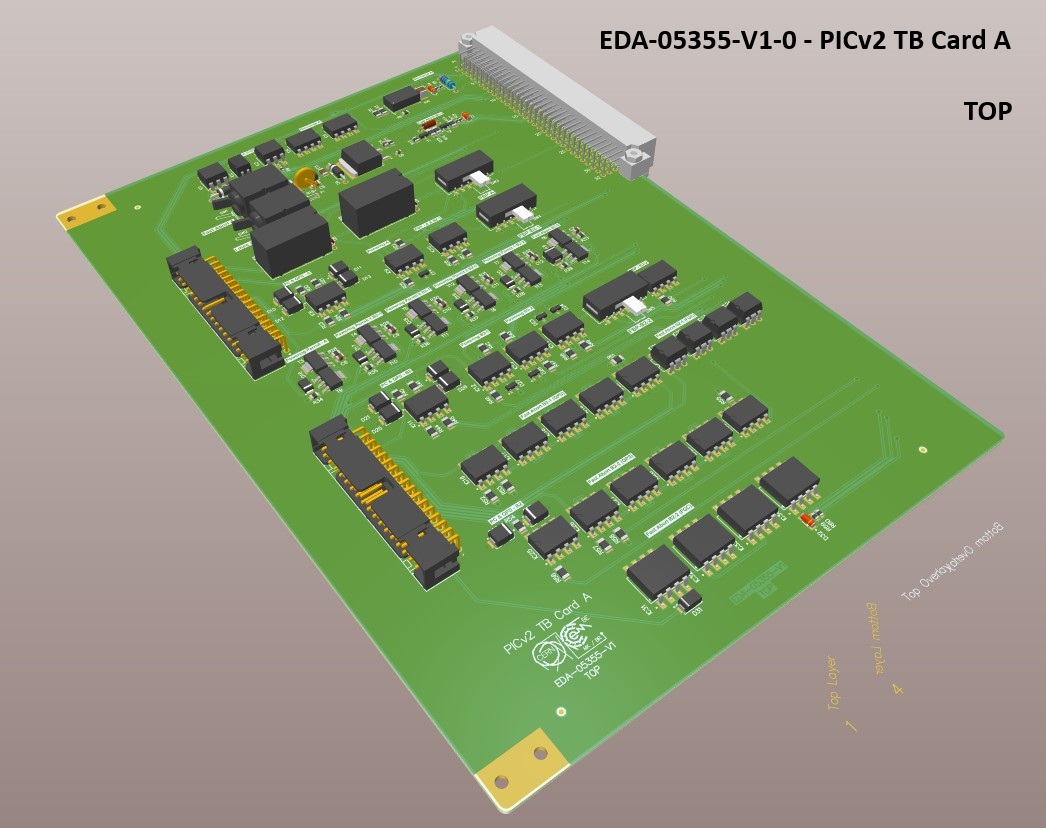 | Card A TB | Interface board for: 1xA type circuits 2xB2 type circuits (Common QPS cable) | EDA-05355-V1-0 |
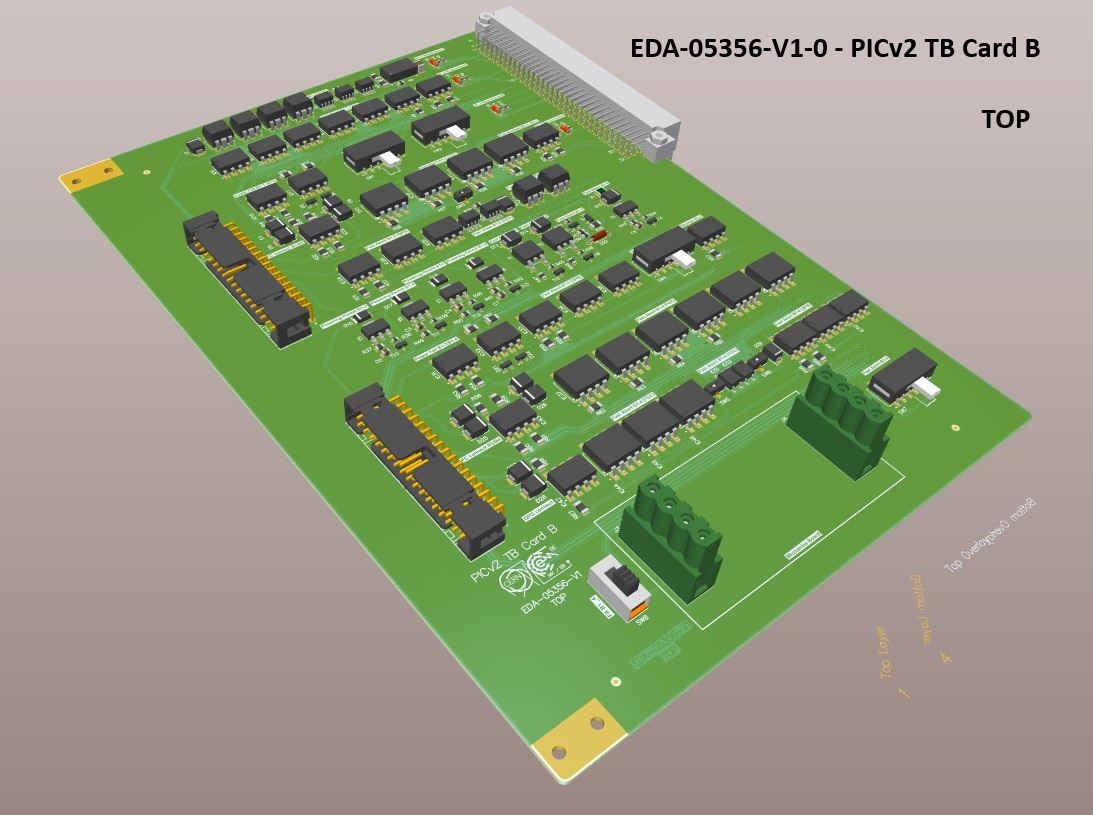 | Card B TB | Interface board for: 4xB1 type circuits | EDA-05356-V1-0 |
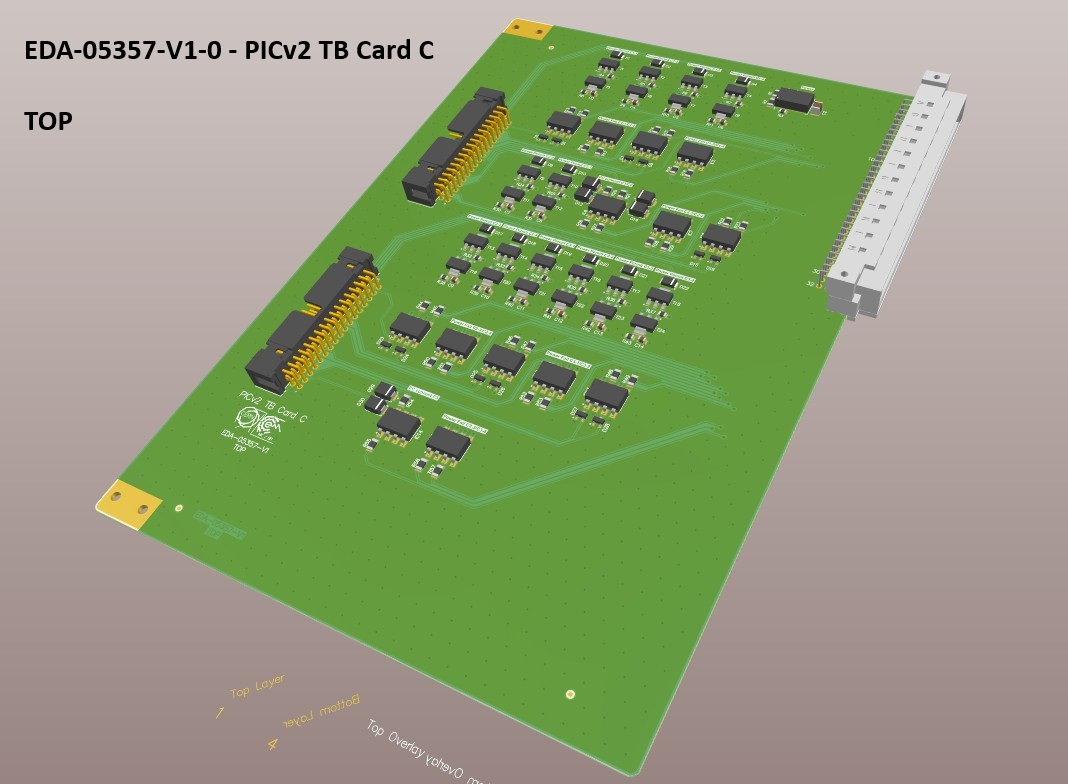 | Card C TB | Interface board for: 12xC type circuits | EDA-05357-V1-0 |
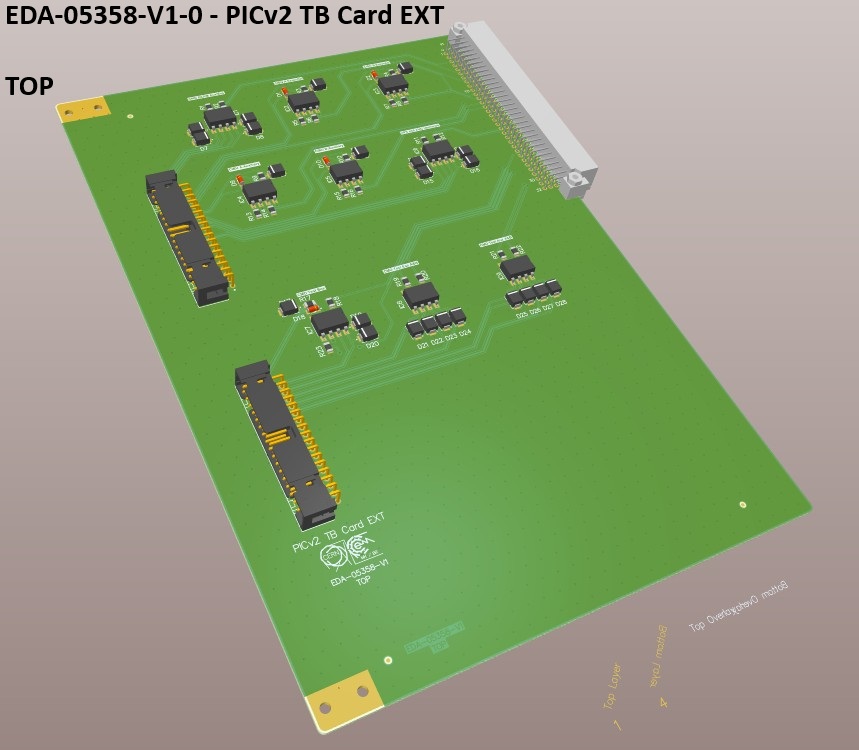 | Card EXT TB | Interface board for: 1xAUG 1xUPS 1xCIBU (Maskable) 1xCIBU (Unmaskable) | EDA-05358-V1-0 |
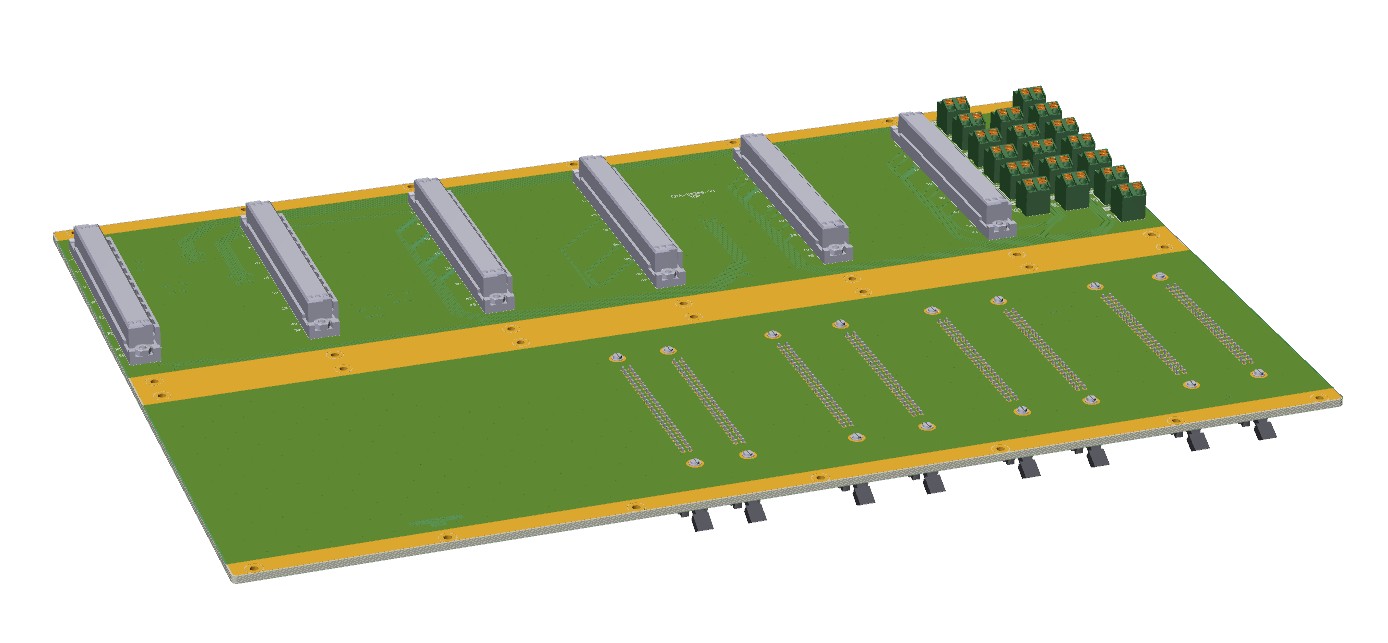 | Backplane A TB | Interface board for: TB I/O Crate type A | EDA-05359-V1-0 |
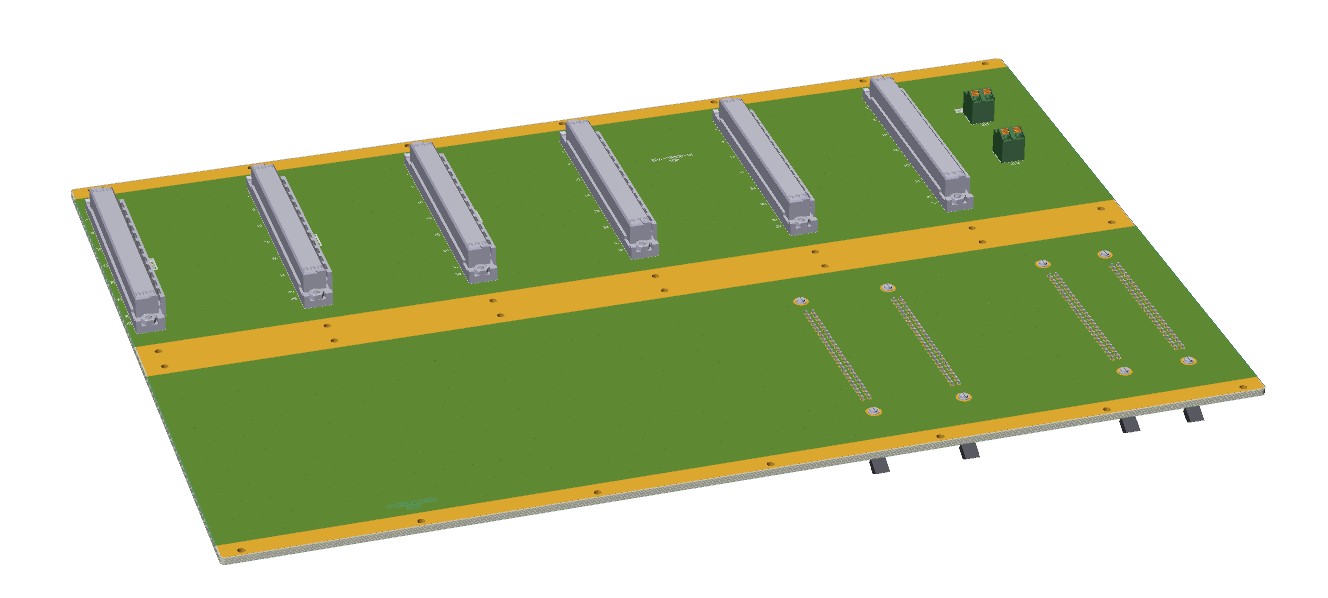 | Backplane B TB | Interface board for: TB I/O Crate type B | EDA-05360-V1-0 |